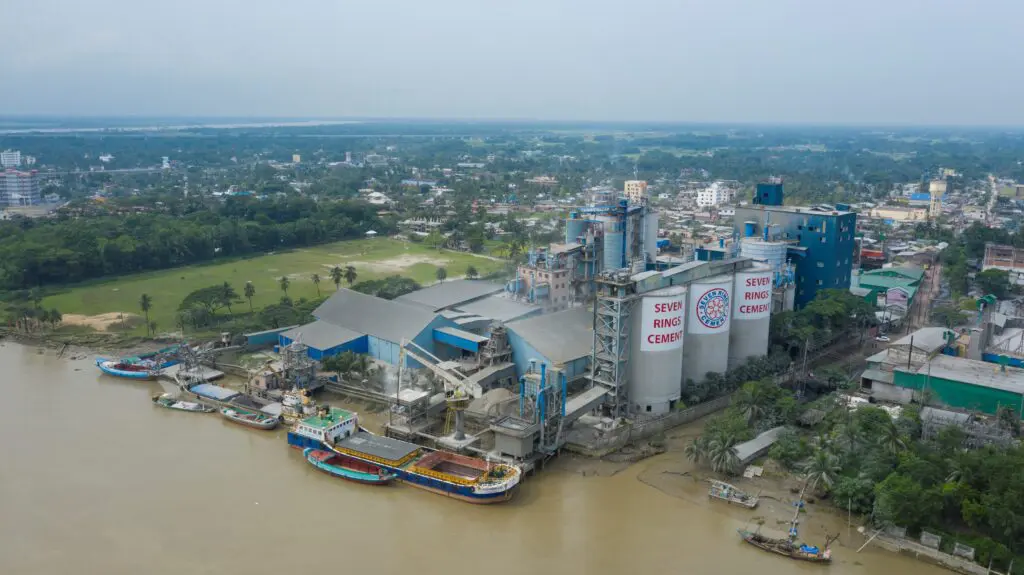
The cement industry in Bangladesh has evolved into one of the fastest-growing and most competitive business sectors in the country, and honestly, its journey is quite impressive when you look at how far it has come. Just a few decades ago, Bangladesh relied almost entirely on imported cement, paying high prices and waiting weeks for shipments to arrive. Today, the situation is completely different. The nation not only produces enough cement to meet domestic demand but also exports to neighboring countries. This transformation didn’t happen overnight—it’s the result of massive economic growth, consistent infrastructure development, and aggressive investment from local business giants.
When we talk about the cement industry, it’s not just about factories and machinery. It’s about the literal foundation on which modern Bangladesh is built—roads, bridges, flyovers, metro rail lines, power plants, industrial zones, and millions of new homes. Think of cement as the silent partner behind the country’s development story. Without it, none of the mega-projects we see today would exist. What makes the industry even more vibrant is the fierce competition among more than 40 manufacturers who continuously push for better quality, better pricing, and better innovation.
In this article, we’ll dig deep into every essential aspect of the cement sector in Bangladesh—its history, current status, major players, challenges, future opportunities, and more. Whether you’re a student, a business owner, an investor, or just a curious reader wanting to understand how this industry supports the economy, you’ll find this detailed guide extremely helpful. So let’s dive in and explore the fascinating world of Bangladesh’s cement industry.
Overview of the Cement Industry in Bangladesh
The cement industry in Bangladesh didn’t become what it is today by accident—it went through years of transformation, countless challenges, and massive investments. If you look back at the earlier decades, especially before the 1990s, Bangladesh didn’t have a strong cement manufacturing base at all. Most of the cement used in the country during that period came from abroad. Imported cement was expensive, slow to arrive, and often inconsistent in quality. But despite these limitations, it was the only option. The local industrial sector simply wasn’t ready yet.
However, everything started to change when economic liberalization policies were introduced. Local entrepreneurs began to realize the enormous potential of producing cement domestically. After all, the country was growing, new buildings were being constructed every year, and the demand for cement was increasing rapidly. Once a few companies stepped in and set up manufacturing plants, the industry began gaining momentum. Soon after, more investors joined the race, and the competition started heating up. This competition is actually one of the reasons why Bangladesh now has some of the most modern and efficient cement plants in the entire region.
Today, Bangladesh’s cement industry is considered not only self-sufficient but also one of the most competitive sectors in South Asia. The country now produces significantly more cement than it consumes, which is a major achievement. Instead of depending on foreign suppliers, Bangladesh has become a cement hub, supplying local construction projects and even exporting cement to countries like India, Nepal, Sri Lanka, and the Maldives.
Another interesting thing about this industry is that despite being heavily dependent on imported raw materials—especially clinker—it continues to grow at a remarkable pace. Manufacturers have invested in advanced technologies, automated plants, and large-scale production lines to ensure efficiency and maintain product quality. This commitment to modernization makes the industry strong and resilient, even when global market conditions are unstable.
In short, the cement industry in Bangladesh has traveled an incredible journey—from a small, import-dependent market to a globally competitive and highly productive sector. Its growth story mirrors the economic rise of Bangladesh itself, making it one of the most important components of the country’s development.
Major Drivers Behind the Industry’s Growth
The growth of the cement industry in Bangladesh didn’t happen randomly. Several powerful forces have pushed it forward. One of the biggest is rapid urbanization. Every year, thousands of people move to cities like Dhaka, Chattogram, Sylhet, and Khulna, which increases the need for new apartments, offices, roads, and public facilities. Naturally, more construction means more cement. As cities expand, the demand keeps rising.
Another major driver is the government’s focus on massive infrastructure projects. Think about the Padma Bridge, Metro Rail, Elevated Expressways, Karnaphuli Tunnel, Padma Rail Link, and new economic zones. These projects require huge amounts of cement—sometimes millions of tons. Manufacturers benefit directly from this construction boom, and it keeps the industry strong even during global economic slowdowns.
Private real estate developers have also played a big role. Housing projects, commercial buildings, shopping malls, and industrial factories are being built at a fast pace. The real estate sector has become one of the top consumers of cement, and it continues to expand as Bangladesh’s middle class grows.
Add to that the rise in foreign investment, economic stability, and modern technology introduced by local companies. All these factors combined create a solid foundation for the cement industry’s growth. It’s a clear sign that the sector is not only strong today but also prepared for the future.


