
Cement is one of the most moisture-sensitive materials on any construction site. During the rainy season, even a small lapse in storage can turn your full bag into a useless lump.
A moisture-damaged bag does not just waste money. It can compromise the strength of whatever structure it ends up in, often without showing obvious signs until much later.
In this article, you will learn the correct way to store cement bags during rain, the common mistakes that ruin stock, and how the right cement choice can reduce risk well before storage becomes a concern.
Why Cement Storage Matters During the Rainy Season
Cement begins to hydrate the moment it comes into contact with water, whether from rain, humidity, or ground moisture. Understanding this reaction is the first step toward protecting your stock.
How Moisture Affects Cement Quality
Cement is a hygroscopic material. This means it naturally draws in moisture from the surrounding air, not just from direct contact with water.
Once moisture enters the bag, premature hydration begins. This forms hard lumps inside the bag, and once that happens, your cement permanently loses its binding strength.
Field observations across most construction sites confirm this pattern. Bags stored near open windows or under leaking roof sheets are almost always the first to show signs of spoilage after a few days of continuous rain.
If you have ever opened a bag expecting fine powder but found hard clumps instead, this is usually the reason behind it.
Common Mistakes During Monsoon Storage
Most storage failures result from a few repeating errors rather than a single major mistake. Spotting these early in your own setup can save an entire stockpile. Here are some common mistakes to avoid:
- Stacking bags directly on a bare floor without any platform.
- Leaving gaps in the tarpaulin covers near the edges of the stack.
- Storing bags too close to the outer walls that absorb rainwater.
- Using torn or already punctured bags without separating them.
- Ignoring small roof leaks until they become major water entry points.
If any of these sound familiar from your own site, it is worth correcting them before the next heavy rainfall.
Best Practices for Storing Cement Bags During Rain
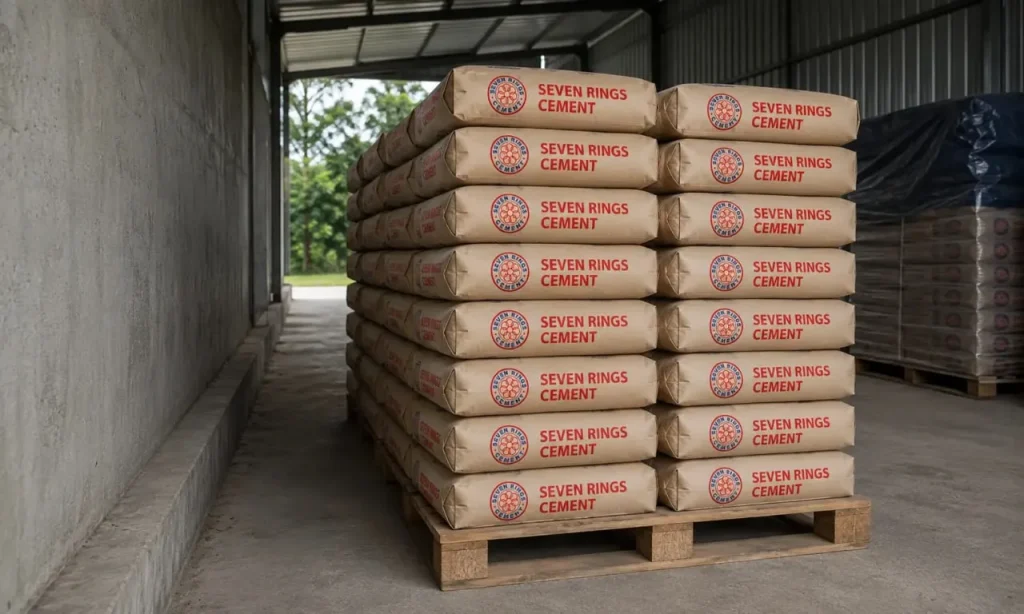
Correct storage during rain depends on three factors working together: elevation, waterproof covering, and ventilation. These challenges are widespread across the cement industry in Bangladesh, especially during monsoon months, so getting all three right gives your cement the best chance of staying usable through the season
1. Choose a Covered and Elevated Storage Area
Your cement should always be stored under a solid roof, never in an open space, even for short periods. A weatherproof shed with a leak-free roof is the safest option for your stock.
The storage platform should be at least 150 mm above ground level. Wooden pallets or planks work well for this purpose, preventing moisture from rising through the floor and into your bags.
2. Use Waterproof Tarpaulins and Sheets
Even inside a covered shed, you should add an extra layer of protection during heavy rainfall. Thick polyethylene sheets or waterproof tarpaulins should completely cover the stack.
The covering should be tucked in tightly at the sides and base. A loose covering can trap humid air inside the stack, causing the very problem you were trying to prevent in the first place.
3. Maintain Proper Stacking Height
Avoid stacking your cement bags higher than 10 bags. Excess height places pressure on the lower bags, which can form compaction lumps even without moisture.
For stacks of more than 8 bags, arrange them in a header-and-stretcher pattern. This crisscross arrangement improves stability and reduces the risk of your stack toppling over.
4. Keep a Safe Distance From Walls
Exterior walls absorb rainwater and transfer dampness inward over time. Keep a gap of at least 300 mm to 600 mm between your cement stack and any outer wall.
This gap also makes it easier for you to inspect the bags and allows better air circulation around the stored stock. If your walls are not damp-proofed, consider applying a damp-proof or waterproof coating to limit moisture transfer.
Step-by-Step Guide to Rain-Proof Cement Storage
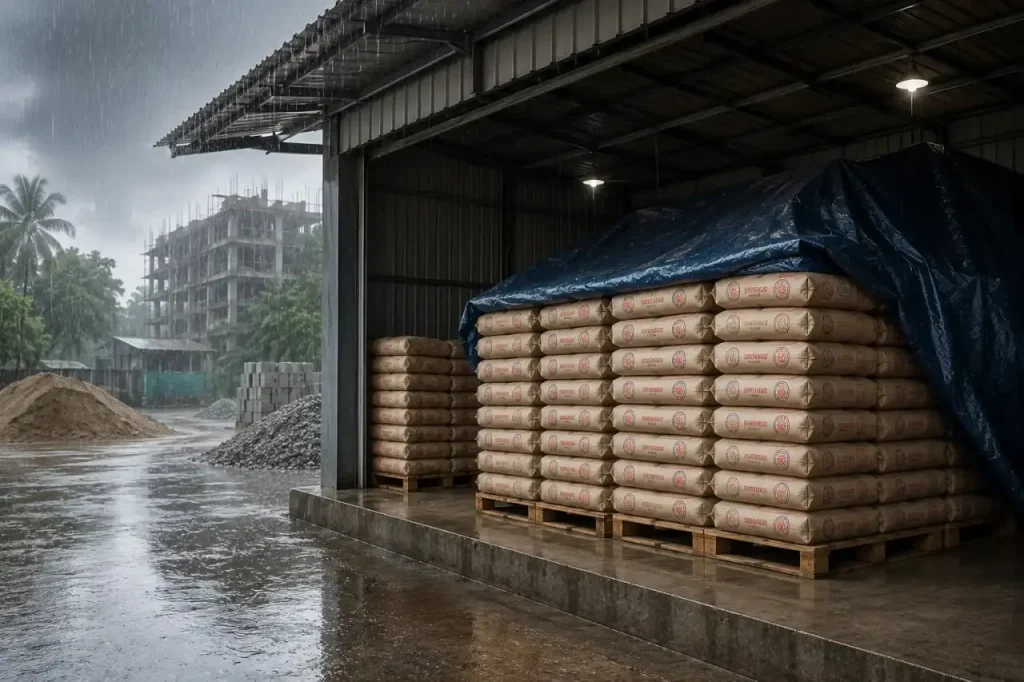
Follow these steps in order to set up a storage system that holds up through the rainy season.
- Inspect your storage shed for roof leaks, wall seepage, and floor dampness before the rainy season begins.
- Set up raised wooden platforms at least 150 mm above the floor level.
- Lay a waterproof plastic sheet beneath the platform as an extra moisture barrier.
- Stack the bags in a crisscross pattern, keeping the height under 10 bags.
- Wrap the entire stack in a waterproof tarpaulin, sealing it tightly at the base.
- Maintain a clear gap from all exterior walls and windows.
- Label each stack with its delivery date to follow a first-in, first-out system.
- Inspect your stack weekly during heavy rain for any signs of water entry.
Recommended Storage Conditions for Cement Bags
The table below summarizes the ideal conditions you should aim for when storing cement bags safely during the rainy season.
| Storage Factor | Recommended Condition |
| Platform height above ground | 150 mm to 200 mm |
| Maximum stack height | 10 bags |
| Distance from exterior walls | 300 mm to 600 mm |
| Covering material | Waterproof tarpaulin or thick plastic sheet |
| Ideal storage duration | Within 90 days of the manufacturing date |
| Humidity level inside the shed | Below 60% where possible |
| Stack pattern above 8 bags | Header and stretcher (crisscross) |
These figures act as a general reference. Your actual conditions may vary slightly depending on regional climate and the specific cement grade in use.
Signs Your Cement Has Been Damaged by Moisture
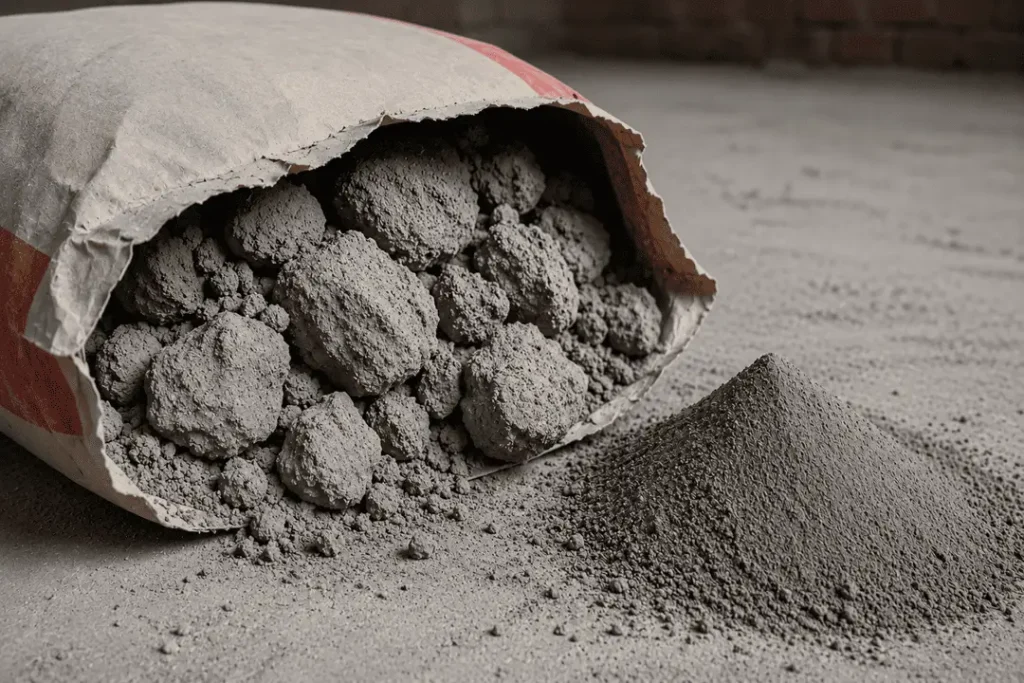
Knowing how to identify spoiled cement is just as important as preventing it, and it starts with choosing the best quality cement in the first place. A quick inspection before use can save you from pouring weak concrete into a structure.
- The bag feels noticeably heavier or damp to the touch.
- Hard lumps are visible when you open or press the bag.
- The cement shows signs of moisture exposure, such as discoloration or hard lumps.
- A small amount of cement mixed with water does not form a smooth, homogeneous paste.
- The bag’s surface shows water stains, mold, or a musty smell.
If you notice any of these signs, set the bag aside and test it before use, especially for structural work like columns, beams, or slabs.
Expert Tips for Long-Term Cement Storage
- Plan your deliveries closer to the actual usage dates rather than stockpiling cement months in advance.
- Use the first-in, first-out method so your older stock is always used before new deliveries.
- Keep different cement types and brands in clearly separated sections of your storage area.
- Avoid using hooks for lifting bags, since punctures allow moisture and air to enter.
- Reinspect your roof sheets and tarpaulins after every major rainfall, not just at the start of the season.
Final Thoughts
Correct cement storage during rain comes down to a few consistent habits. Keep your bags elevated, covered, and away from damp walls, and inspect them regularly through the rainy season.
The starting quality of your cement also plays a real role in how well it holds up under storage stress. Choosing a brand like Seven Rings Cement, backed by stringent quality control and durable bag packaging, gives you a stronger starting point before your storage practices even come into play.
FAQs
1. How long can cement be stored before it loses strength?
Cement is best used within 90 days of its manufacturing date. Beyond this period, strength can drop noticeably, especially if your storage conditions are not ideal.
2. Can you store cement bags outdoors during rain if covered with a tarpaulin? Open storage should be avoided wherever possible. If you have no alternative, the bags must sit on a raised platform and be fully wrapped in a sealed waterproof tarpaulin, but this should only be a short-term solution.
3. Why should you avoid stacking cement bags too high?
Stacking beyond 10 bags places excess weight on the lower layers. This pressure can compact your cement into lumps even without any moisture exposure.
4. Does the brand of cement affect how well it survives storage?
Yes. Cement with consistent raw material quality and strong bag packaging tends to resist moisture damage better during short delays. This makes brand selection a practical part of your storage planning, not just a quality preference.
5. What is the easiest way to check if your stored cement is still usable?
Open the bag and check for hard lumps or a change in texture. Mixing a small amount with water should form a smooth paste that hardens within 24 hours. If it does not, the cement should not be used for structural work.

