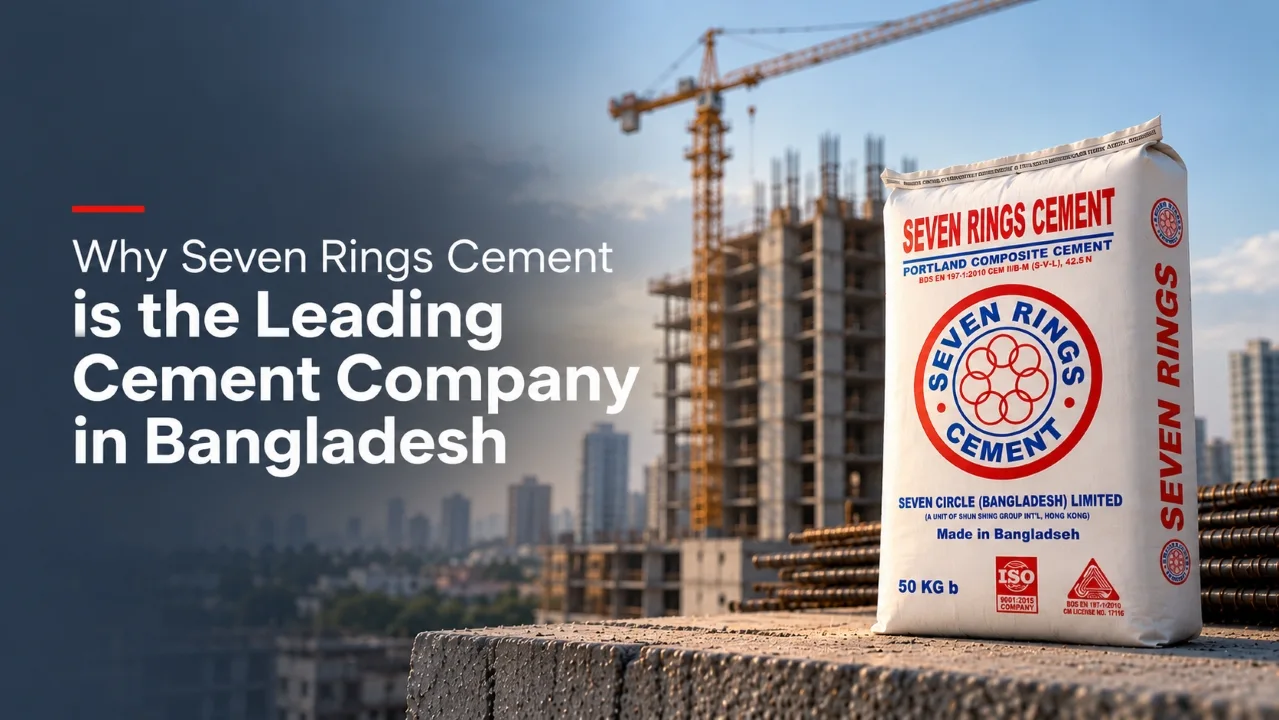
Bangladesh is building faster than ever before. Bridges, tunnels, metro lines, airports, and power plants are rising across the country, and every one of them depends on a single material to hold everything together. That material is cement.
Among the many names competing for space in this growing market, one cement company in Bangladesh has consistently stood out for its scale, technology, and role in the nation’s most important infrastructure work. That company is Seven Rings Cement.
In this article, we will look at what makes Seven Rings Cement a leading cement company in Bangladesh, from its history and technology to its role in some of the country’s most ambitious construction projects.
A Brief History of Seven Rings Cement
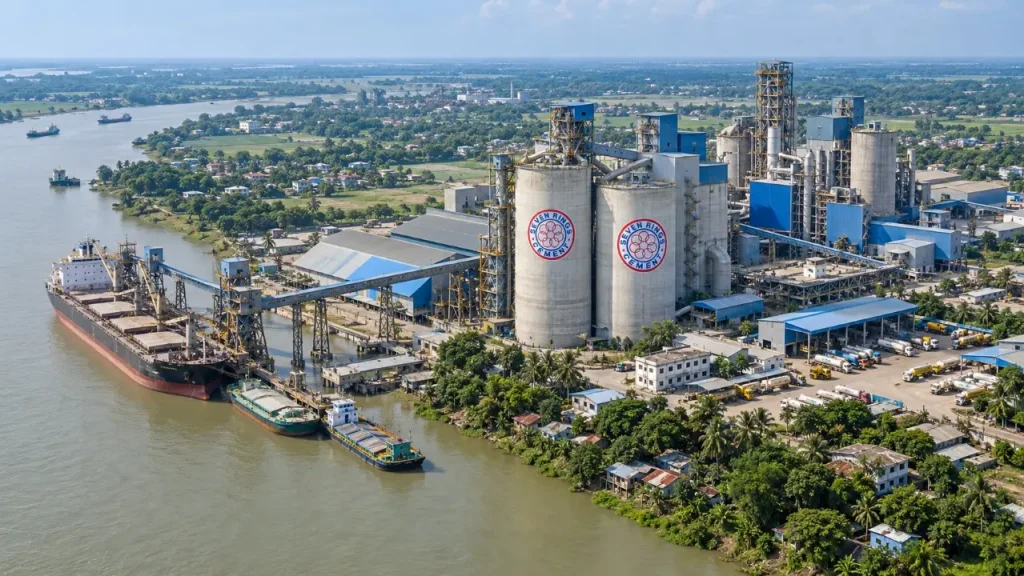
Seven Rings Cement is part of the Hong Kong-based multinational Shun Shing Group, which was founded in 1988 and now operates offices in 10 cities worldwide.
The brand’s journey in Bangladesh began in 1991 with the marketing of bagged cement, well before the company had its own factory on the ground.
You might be wondering what has kept the company relevant for more than three decades in such a competitive industry. Based on Seven Rings Cement’s own story, the answer lies in steady expansion, early investment in modern technology, and a long-term focus on quality control.
From Bagged Cement to a Nationwide Manufacturer
Driven by strong market demand, Seven Rings Cement established its first production plant in Dhaka in 2001 as Seven Circle (Bangladesh) Limited, with an initial capacity of 0.5 million metric tons per year.
The brand later expanded into Khulna in 2014 and Chattogram in 2021.
Today, the company operates three factories with a combined annual installed production capacity of 8.4 million metric tons, employs more than 5,000 people, and works with over 1,600 valued partners across the country.
A Global Backbone Through the Shun Shing Group
Seven Rings Cement benefits directly from being part of a larger international group. The Shun Shing Group also owns Cemcoa, a Hong Kong-headquartered raw material trading arm with 36 years of experience sourcing clinker, gypsum, limestone, slag, and fly ash for cement production worldwide.
This relationship gives Seven Rings Cement reliable access to high-grade raw materials sourced from countries including Thailand, Vietnam, Indonesia, Japan, India, the UAE, and Oman.
The group has also expanded internationally through Green Cement LLC Dubai, a 1 million metric ton per annum VRM plant in the UAE, and has exported Seven Rings cement to India since 2008.
What Sets Seven Rings Cement Apart
Not every cement company in Bangladesh is built the same way, and the differences are clear when you look at production technology, product range, and quality control practices.
A Product Range Built for Different Needs
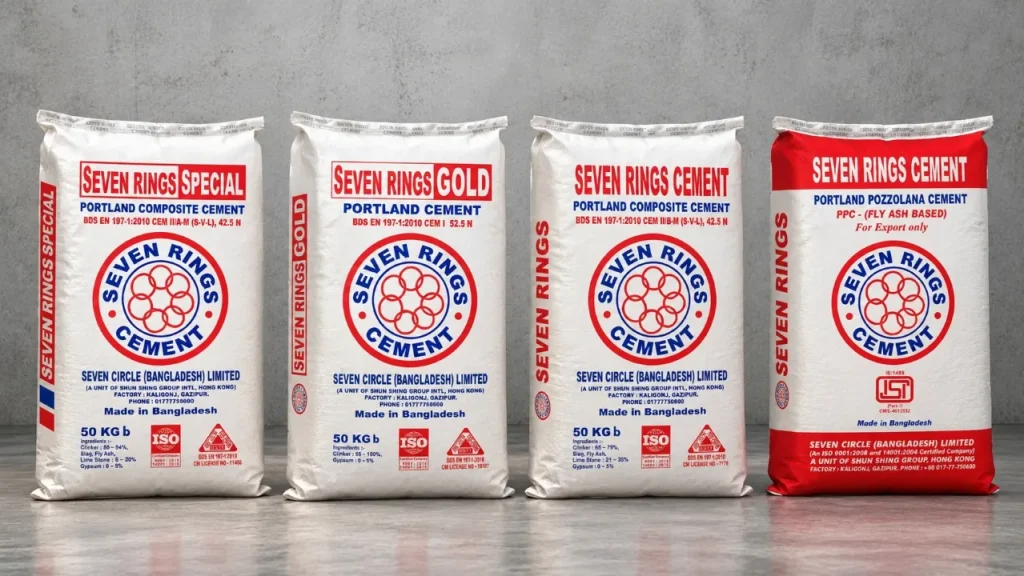
Seven Rings Cement offers a focused product lineup, each designed for a specific construction purpose. The current range includes:
| Product | Type | Best Suited For |
| Seven Rings Cement (CEM II/B-M) | Portland Composite Cement | General construction, durable, long-lasting structures |
| Seven Rings Special (CEM II/A-M) | Portland Composite Cement | RCC structures, high-rise buildings |
| Seven Rings Gold (CEM I) | Portland Cement | High early strength, rapid setting, pre-stressed concrete |
| Seven Rings Cement PPC (Export Based) | Portland Pozzolana Cement | Export market, built to Indian Standard IS 1489 (Part 1) 2015 |
Vertical Roller Mill Technology
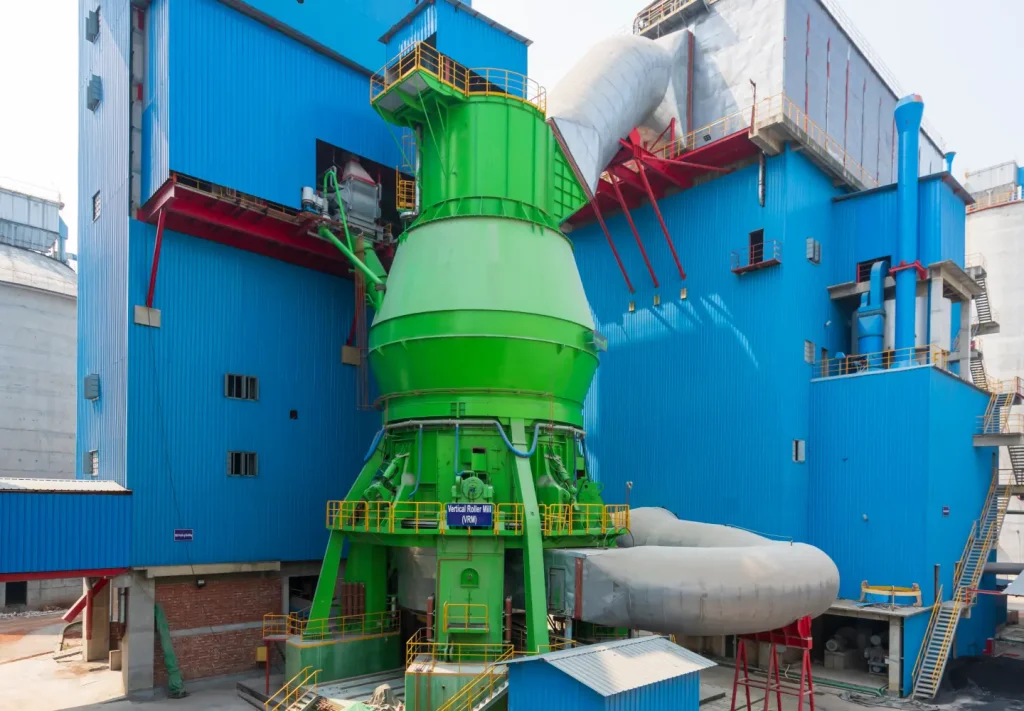
Seven Rings Cement uses German LOESCHE Vertical Roller Mill (VRM) technology at both its Dhaka and Chattogram plants.
LOESCHE has more than 100 years of expertise in VRM production, and this technology allows for more efficient grinding, better particle consistency, and lower energy consumption compared to older grinding methods.
In practical terms, this means the cement produced has a more consistent quality from batch to batch, which matters a great deal on large-scale construction sites where uniformity is critical.
Rigorous Quality Control at Every Step
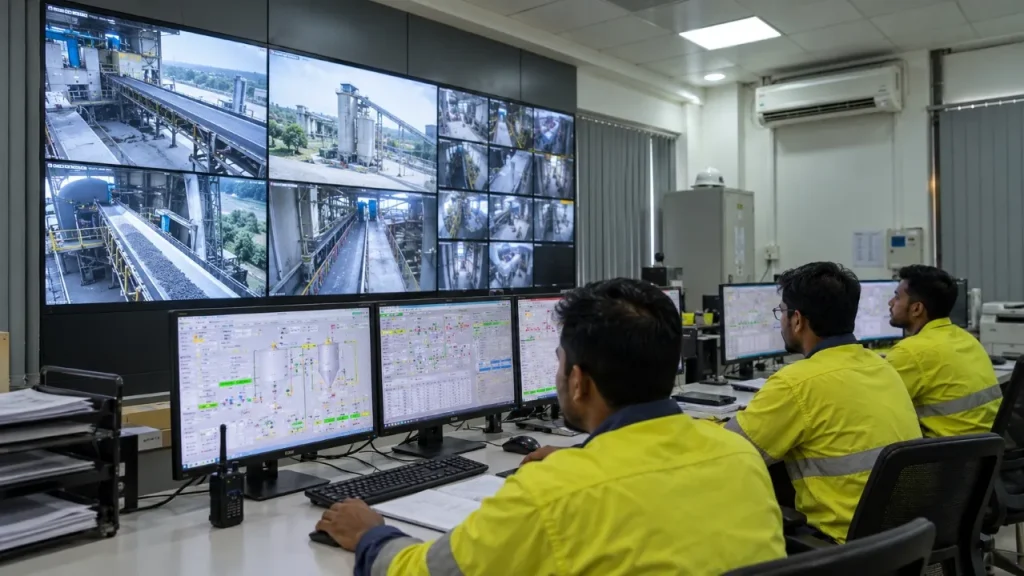
Let’s break down how the company actually protects quality. All Seven Rings Cement plants are certified to ISO 9001:2015, and quality checks run continuously rather than at a single point in the process.
- Every production step is computerized and PLC-controlled through a Central Control Room.
- Cement samples are tested hourly in an in-house laboratory.
- Samples are regularly sent to the Bangladesh University of Engineering and Technology (BUET) laboratory for independent random checks.
- EDXRF technology provides 24/7 precision chemical analysis of raw materials and finished cement.
- A dedicated Concrete Lab, equipped with UK-sourced testing machinery, optimizes mix designs for large infrastructure projects and ready-mix plants.
A Genuine Commitment to Sustainability
Cement production is inherently resource-intensive, and Seven Rings Cement has taken clear, measurable steps to reduce its environmental footprint.
| Sustainability Practice | Detail |
| Dust emission control | Kept at or below 30 mg per Nm³, within strict local and international standards |
| Dust collectors | 103 units at the Gazipur plant, 34 at Khulna, and 31 at Chattogram |
| Environmental certification | All factories are ISO 14001:2015 certified |
| Clinker unloading control | ECO hoppers at jetties provide 100% dust control during unloading |
| Tree plantation | Recognized with the Prime Minister’s Award for Tree Plantation |
Think about this for a moment. A company does not receive a national award for tree plantation, or run three factories under ISO 14001:2015 certification, without a genuine and sustained commitment behind the numbers.
Seven Rings Cement in Bangladesh’s Mega Infrastructure Projects
A cement company earns its reputation through the projects it is trusted to support, not through marketing alone.
Seven Rings Cement has contributed to several of the largest infrastructure projects in the country’s history.
Hazrat Shahjalal International Airport Third Terminal
Breaking ground in 2019 and opening in May 2024, the third terminal at Hazrat Shahjalal International Airport represents a 1.8 billion US dollar investment in Bangladesh’s aviation sector.
The terminal will triple annual passenger handling to 24 million and raise cargo capacity from 200,000 to 500,000 tonnes a year, positioning the airport as a major regional cargo hub.
Padma Multipurpose Bridge
Spanning 6.15 kilometers across the Padma River, the Padma Multipurpose Bridge is the longest bridge in Bangladesh and features the world’s deepest bridge piles at 127 meters.
It combines a four-lane highway with a single-track railway line and is expected to increase Bangladesh’s GDP by 1.23%, connecting 13 southwestern districts to more prosperous regions and unlocking 17 planned economic zones.
Dhaka Elevated Expressway
The Dhaka Elevated Expressway is designed to reduce congestion and improve logistics across the capital, contributing to smoother transportation and stronger industrial activity within Dhaka.
Dhaka Metro Rail Project
The Dhaka Metro Rail Project is transforming daily commuting in the capital. Metro Line 6, an elevated 12-kilometer stretch from Uttara North to Agargaon, is already operational, offering reduced travel time, better connectivity, and stress-free travel for millions of daily commuters.
Karnaphuli Tunnel
As Bangladesh’s first underwater expressway, the Karnaphuli Tunnel runs 3.32 kilometers beneath the Karnaphuli River in Chattogram.
It features twin tubes, each with two lanes, allowing seamless traffic flow beneath the river and marking a historic engineering achievement for the city.
Other Notable Projects
Seven Rings Cement’s project portfolio also includes the Moghbazar-Mouchak Flyover, the Payra 1320 MW Thermal Power Plant, the Padma Rail Link Project, the Purbachal Expressway, and the Khilgaon U-Loop.
These are not small residential jobs. These are national projects where any failure in materials could have serious consequences. Being trusted with this level of responsibility again and again says a great deal about a company’s consistency.
Production Capacity and Industry Standing
Bangladesh’s overall cement production capacity now exceeds 78 million tons annually, reflecting just how large and competitive this industry has become.
Within that landscape, Seven Rings Cement has built a strong position through consistent output, nationwide distribution, and a workforce built to support large-scale operations.
Company Snapshot
| Detail | Information |
| Parent Group | Shun Shing Group |
| Production Capacity | 8.4 million metric tons per annum |
| Plants | 3, located in Gazipur, Khulna, and Chattogram |
| Employees | 5,000 plus |
| Valued Partners | 1,600 plus |
| Years of Experience | 34 plus (bagged cement marketing since 1991) |
| Managing Director | Tahmina Ahmed |
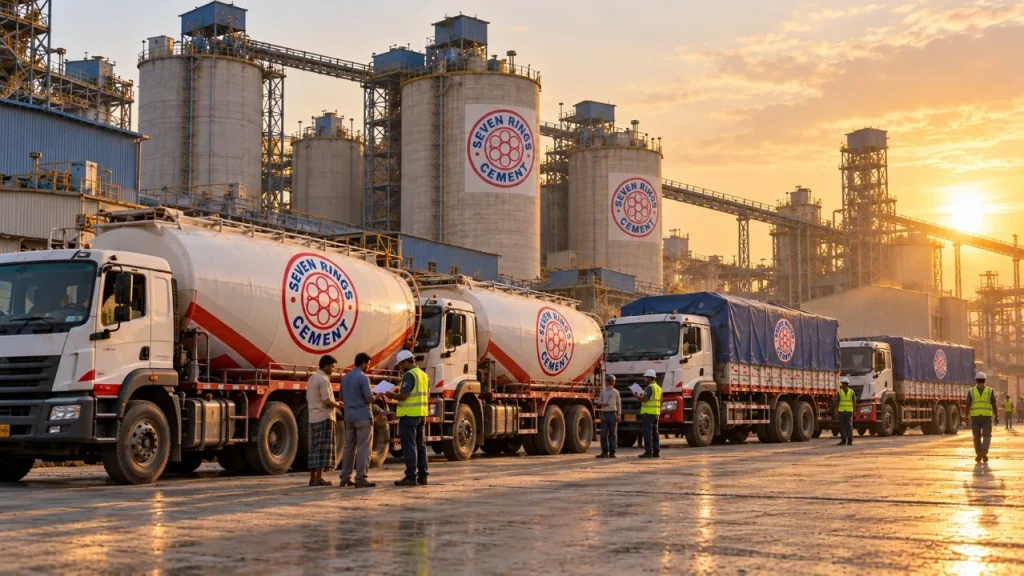
Seven Rings Cement’s Road Transport Division operates more than 525 trucks and bulk carriers, while its Water Transport Division runs a fleet of 55 vessels that navigate inland waterways and cross the Bay of Bengal to reach mother vessels.
Backing this distribution network is Shun Shing Packaging Industries Limited, the country’s largest cement bag plant, producing 150 million high-quality cement bags a year.
Scale alone does not make a company a leader. What matters is how that scale is used, and Seven Rings Cement has directed its capacity toward some of the most critical infrastructure work in the country rather than spreading itself thin.
Vision for the Future
Seven Rings Cement’s stated vision is to be regarded as the best cement company in the country through quality, innovation, technology, and modern management, while contributing to Bangladesh’s social and economic development.
Its mission is simple and direct: to be the first choice of all users and the market leader.
As the country’s infrastructure ambitions grow, including new expressways, energy projects, and urban development, the demand for reliable, high-strength cement will only increase.
Seven Rings Cement’s track record on major national projects positions it well to remain a central part of that growth.
Final Thoughts
Bangladesh’s rapid infrastructure development, from the Padma Bridge to the Karnaphuli Tunnel, has created enormous demand for cement that performs reliably at scale.
Seven Rings Cement has met that demand through advanced VRM production technology, ISO-certified quality control, a genuine sustainability program, and direct involvement in some of the most significant projects in the country’s history.
For builders, developers, and engineers evaluating a cement company in Bangladesh, the combination of proven strength, consistent quality, and a track record on national infrastructure is difficult to overlook.
That combination is exactly what has established Seven Rings Cement as a leading name in the industry.
Frequently Asked Questions
What makes Seven Rings Cement a leading cement company in Bangladesh? Seven Rings Cement is recognized for its VRM production technology, ISO 9001:2015- and ISO 14001:2015-certified operations, and direct involvement in major national infrastructure projects such as the Padma Bridge and Dhaka Metro Rail.
When did Seven Rings Cement start operations in Bangladesh?
The brand began marketing bagged cement in Bangladesh in 1991 and established its first production plant in Dhaka in 2001.
What is Seven Rings Cement’s current production capacity?
The company operates three factories in Gazipur, Khulna, and Chattogram with a combined annual installed capacity of 8.4 million metric tons.
Which major projects has Seven Rings Cement contributed to?
Seven Rings Cement has contributed to the Padma Multipurpose Bridge, Dhaka Elevated Expressway, Dhaka Metro Rail, Karnaphuli Tunnel, Hazrat Shahjalal International Airport third terminal, Moghbazar-Mouchak Flyover, Payra Thermal Power Plant, Padma Rail Link, Purbachal Expressway, and Khilgaon U-Loop.
What cement products does Seven Rings Cement offer?
The company’s product range includes Seven Rings Cement CEM II/B-M, Seven Rings Special CEM II/A-M, Seven Rings Gold CEM I, and an export-focused Portland Pozzolana Cement made for the Indian market.
How does Seven Rings Cement support sustainability?
The company keeps dust emissions at or below 30 mg per Nm3, operates 168 dust collectors across its three plants, holds ISO 14001:2015 certification, and has received the Prime Minister’s Award for Tree Plantation.

